 how-to
Why Choose an Adjustable Base for Sleep in 2026
Table of Contents
- How an Adjustable Base for Sleep Works and Who It Helps
- Adjustable Bed Base Benefits: Pain Relief, Breathing, and Circulation
- Adjustable Bed Positions for Sleeping: Which Angle Works Best
- Adjustable Base and Mattress Compatibility: What You Need to Check
- Adjustable Bed Disadvantages and the Limits of Health Claims
- Cost, Couples, and Safety: What to Know Before You Buy
- Conclusion: Is an Adjustable Base Right for Your Bedroom?
- Frequently Asked Questions
Last Updated: October 8, 2026
How an Adjustable Base for Sleep Works and Who It Helps
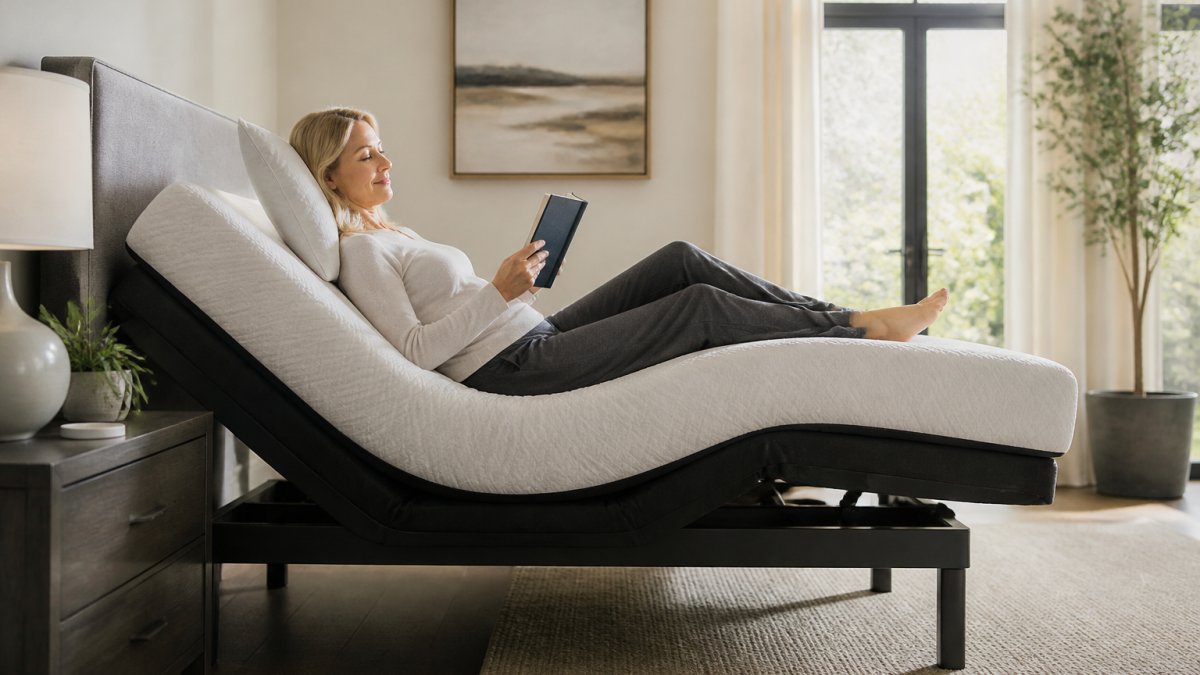
An adjustable base for sleep is a motorized bed foundation that raises your head, your feet, or both to change how your body rests. At Cannon's Fine Home Furnishings, we've watched these power bases move from a niche product to one of the most requested upgrades in our mattress department. The appeal is simple: you stop sleeping flat and start sleeping at an angle your body can actually relax into.
The mechanics behind head and foot elevation
A motorized frame sits under your mattress. A remote control or mobile app sends a signal, and quiet motors lift the head section, the foot section, or both together. Most models also offer preset positions, so you press one button instead of guessing at an angle.
Here's what matters: the base does the work, not your pillow stack. You get repeatable positioning every night.
Adjustable Bed Base Benefits: Pain Relief, Breathing, and Circulation
The benefits people ask us about most often fall into a few clear buckets. Many sleepers find real relief. Others find the changes subtle. Both outcomes are normal, and it helps to know which camp you're likely in.
- Back pain and pressure relief: Raising your head and knees takes strain off the lower back.
- Easier breathing: Head elevation can open airways and reduce snoring for some sleepers.
- Acid reflux support: Sleeping on an incline may keep stomach acid down.
- Better circulation: Foot elevation helps with leg swelling after a long day.
- Less morning stiffness: Customized positioning can ease how you feel at wake-up.
Back pain, pressure points, and morning stiffness
The zero-gravity position is the one we demo most. It lifts your head and feet slightly while your hips sink, which spreads weight away from pressure points. Sleepers with lower back pain often describe it as the first position where their spine feels supported instead of arched.
Adjustable Bed Positions for Sleeping: Which Angle Works Best
The best sleeping angle depends on your health goal, not a universal number. There is no single correct incline. What works for reflux may feel wrong for side sleeping.
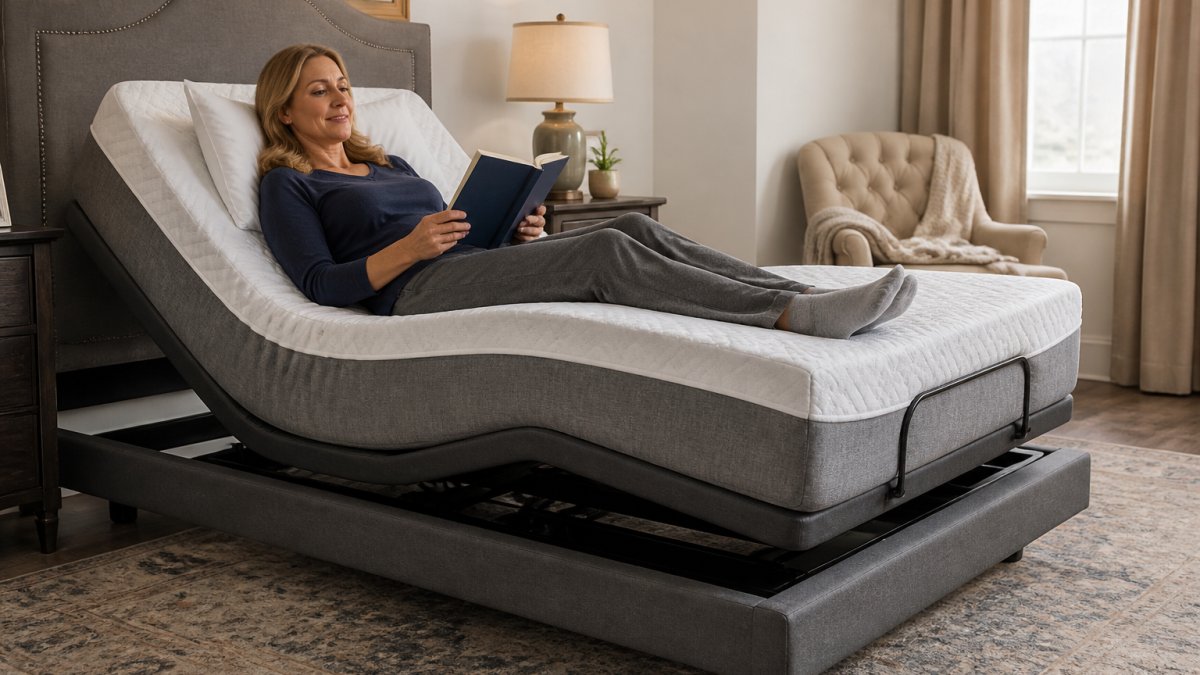
Here's how we'd match positions to problems:
- Snoring or congestion: Raise the head a little. Small changes often help.
- Acid reflux: A gentle incline on the upper body tends to work better than a steep one.
- Leg swelling: Lift the foot section after long days on your feet.
- Lower back pain: Try the zero-gravity or lounge position first.
- Reading or watching TV: The lounge position keeps your neck neutral.
Start small. A slight incline is easier on your body than a dramatic one.
Adjustable Base and Mattress Compatibility: What You Need to Check
Not every mattress works on a power base, and this is where most buyers get tripped up. Adjustable base and mattress compatibility comes down to two things: flexibility and construction.
Check these before you buy:
- Is your mattress labeled adjustable-friendly?
- Does it use an innerspring, hybrid, or memory foam build?
- Is it too thick or too firm to bend?
- Does the warranty cover use on an adjustable base?
- Does the base's weight limit fit your mattress?
Traditional innerspring mattresses often resist bending. Memory foam, latex, and most hybrids flex with the frame. If you're unsure, ask before you commit. We let customers test mattresses on a working base in our showroom so they feel the difference firsthand.
Adjustable Bed Disadvantages and the Limits of Health Claims
An adjustable base is a comfort product, not a medical device. That distinction matters, because the marketing around power bases often blurs the line between "sleepers report relief" and "this treats a condition." Here is the honest version.
What the evidence actually supports
It helps to sort claims into three buckets.
- Well-established mechanics. Elevating the head of the bed raises your upper body relative to your stomach, and gravity works against reflux. This is basic physiology, and it is why clinicians have long recommended head-of-bed elevation for nighttime reflux. An adjustable base is one of the easiest ways to hold that angle all night.
- Commonly reported, reasonably supported. Sleepers with lower back pain and pressure-point complaints frequently describe less morning stiffness in a zero-gravity or lounge position, because weight is redistributed off the lower back and hips. Foot elevation for leg swelling after long standing or sitting follows the same logic as elevating your legs on a pillow.
- Possible but not proven. Reduced snoring, easier breathing, and better circulation are widely reported, but the strength of the effect varies person to person. An adjustable base is not a treatment for sleep apnea, and it does not replace a CPAP machine, medication, or a clinician's plan.
The real disadvantages
- Cost. A power base is a meaningful add-on to a mattress purchase, and the price climbs with size, split configurations, and features like massage or app control.
- Weight and setup. These frames are heavy, often require two people to position, and many need assembly or professional installation.
- Power dependence. No outlet, no adjustment. During an outage the base stays wherever it stopped, and you cannot raise or lower it until power returns.
- Mattress restrictions. A base that is not compatible with your mattress can void the mattress warranty or damage the foam or springs.
- Motion and noise. Motors are quiet on most current models, but cheaper units can hum, and a shared base transmits some movement.
- Not a cure. The single biggest disappointment we see is a buyer who expected a medical fix. If your goal is treatment, see a clinician. If your goal is comfort, positioning, and a better shot at falling asleep, an adjustable base is a reasonable tool.
Cost, Couples, and Safety: What to Know Before You Buy
Two questions decide most purchases: what it costs to own, and whether two people can share one without a fight. Here is how to think through both, plus the safety basics that rarely make it into the sales pitch.
What an adjustable base actually costs to own
Pricing depends on size, features, and brand, so treat any single number as a starting point rather than a quote. A few patterns hold across the market:
- Size drives the base price. A twin or twin XL is the least expensive; queen, king, and split king step up from there, and a split king is effectively two bases in one frame.
- Features drive the spread. A basic head-and-foot lift costs less than a model with massage, under-bed lighting, USB ports, wall-hugger hinges, or app control. Preset positions and a wireless remote are now standard on most mid-range units.
- Split configurations cost more. If you and a partner want independent positioning, expect to pay a premium over a single-piece base of the same size.
- Delivery and setup. Many retailers include in-home delivery and assembly; others charge for it or ship the base for self-assembly. Ask before you buy, because these frames are heavy.
- Electricity. The motors draw very little power and only run while adjusting, so the ongoing energy cost is negligible compared with almost any other appliance in the bedroom.
- Maintenance and durability. There is no filter to change and no fluid to top off. The realistic maintenance is keeping the motors and frame clear of dust, pets, and obstructions, and using a surge protector. A well-built base commonly lasts many years, and the warranty, often several years on the frame and motors, is the best signal of how long the manufacturer expects it to hold up.
- Return policy. Confirm the return window and whether return shipping is on you. A base that does not fit your bed frame or mattress is an expensive mistake to unwind.
Couples and shared beds
The single feature that resolves most shared-bed complaints is a split or dual base. Each side adjusts on its own, so one partner can elevate the head for reflux or reading while the other stays flat. A split king is the most common setup, because it lets two people share a bed footprint while controlling their own side.
A few practical notes for couples:
- Motion transfer. Independent sides reduce, but do not eliminate, the feeling of a partner adjusting. Higher-end bases isolate movement better.
- Noise. Motors on current models are quiet, but a cheaper base can be audible in a silent room. Test one in person if noise matters.
- Mattress pairing. A split base needs two mattresses, or a split-head mattress designed for the frame. Confirm compatibility before you commit.
- Settings that do not fight. Presets and memory positions let each partner return to their preferred angle without re-adjusting every night.
Safety basics
- Keep the frame clear of pets and small children when it is moving.
- Check the weight limit before adding a heavy mattress or a second sleeper.
- Use a surge protector to protect the motors.
- Confirm the base fits your existing bed frame and your room before delivery.
- If you have mobility limitations, look for a base with a wired remote or an easy-to-reach control, and consider whether you can operate it safely from the mattress.
- During a power outage the base will not move, so plan for how you will get in and out if you rely on elevation.
Conclusion: Is an Adjustable Base Right for Your Bedroom?
If you wake with back pain, snore, deal with reflux, or just want to fall asleep faster, an adjustable base for sleep is worth testing in person.
At Cannon's Fine Home Furnishings, you can try adjustable bases on real mattresses in our 70,000-square-foot showroom.
Get started with Cannon's Fine Home Furnishings and find the base that fits your body and your budget.
Frequently Asked Questions
What are the downsides of using adjustable beds?
Adjustable bed disadvantages include higher upfront cost, needing a compatible mattress, and taking up slightly more space than a standard frame. Some users find the motor noise noticeable, and repairs can be costly after warranty. They also add weight, making moving harder. If you have a foam or innerspring mattress that cannot bend, you may need to replace it. Weigh these factors against the comfort and positioning benefits before buying.
Can you use any mattress on an adjustable base?
No, not every mattress works. Adjustable base and mattress compatibility depends on the mattress construction. Memory foam, latex, and most hybrid mattresses bend easily and are safe. Traditional innerspring mattresses with stiff coils or a rigid edge may not flex and can be damaged. Always check the manufacturer's guidelines. At Cannon's Fine Home Furnishings, our team can confirm which mattresses pair with the adjustable bases we carry.
Is sleeping on an adjustable bed good for you?
Many people find adjustable beds helpful for comfort and sleep quality. Elevating the head can ease breathing and reduce snoring, while raising the feet may improve circulation. For back pain, a slight incline can relieve pressure. However, health claims vary and not everyone benefits. If you have a medical condition like sleep apnea, talk to your doctor first. An adjustable base is a comfort tool, not a treatment.
What features should you look for in an adjustable base?
Look for a quiet motor, wireless remote or mobile app, preset positions like zero-gravity and lounge, and a massage feature if desired. Check weight capacity and warranty length. For couples, consider a split king so each side adjusts independently. Confirm the base fits your bed frame and mattress. Visit a showroom to test the controls and see how the incline feels before you commit.