 how-to
How to Test Mattress Comfort: A Step-by-Step Guide
Table of Contents
- How to Test a Mattress in Store: A Step-by-Step Protocol
- Before You Go: What to Bring and How to Prepare
- Step 1: Dress for the Test
- Step 2: Remove Your Shoes and Lie Down
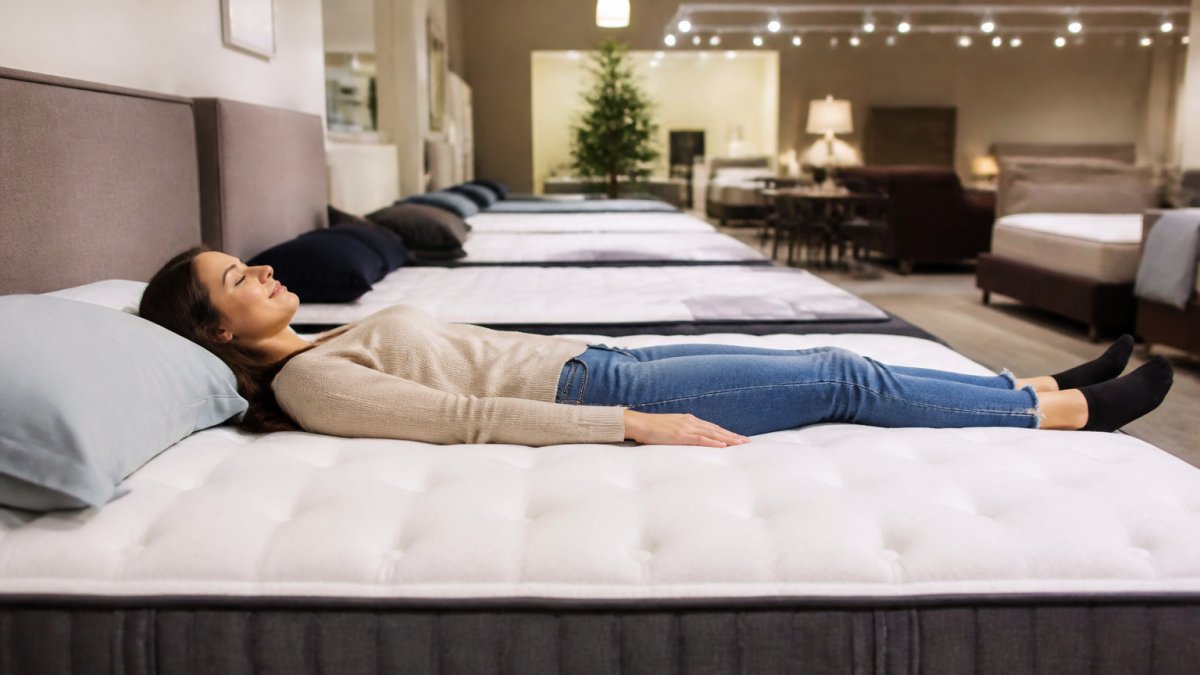
- Step 3: Hold Your Typical Sleep Position for 10-15 Minutes
- Step 4: Check Pressure Points and Spinal Alignment
- Step 5: Test Motion Isolation and Edge Support
- Step 6: Compare Side by Side, Not One at a Time
- How to Tell If a Mattress Is Too Firm (or Too Soft)
- Mattress Comfort Test at Home: What to Check After Delivery
- Mattress Trial Period Tips: How to Use Your Return Window Wisely
- How to Evaluate Comfort for Couples
- Separating Mattress Comfort from Pillow and Foundation Effects
- Common Mistakes to Avoid When Testing Mattress Comfort
- Frequently Asked Questions
Last Updated: October 16, 2026
How to Test a Mattress in Store: A Step-by-Step Protocol
The best way to test mattress comfort is to lie in your typical sleep position for 10 to 15 minutes, then check pressure points, spinal alignment, motion isolation, and edge support.
This guide covers a repeatable protocol for any store, plus what to check at home.
Before You Go: What to Bring and How to Prepare
A little prep turns a 10-minute showroom visit into a real test.
- Wear loose clothing you can lie down in. Skip tight jeans, belts, or hard hardware.
- Bring your own pillow. Pillow height changes neck and shoulder alignment, and a showroom pillow can make a good mattress feel wrong.
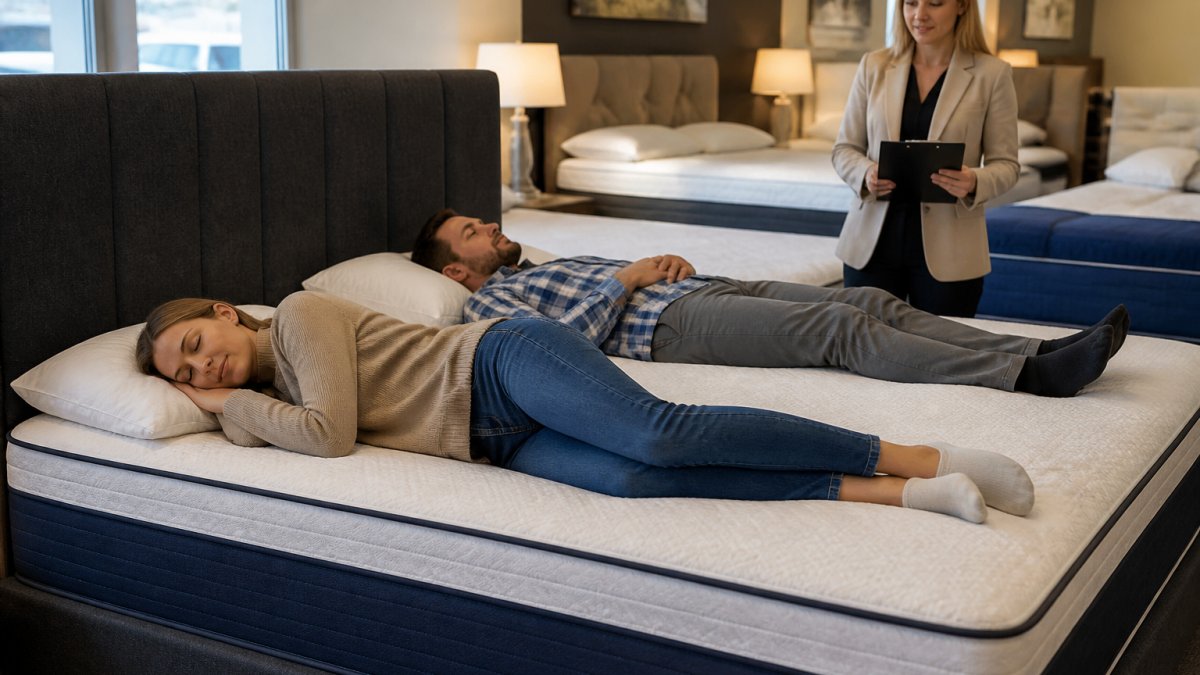
- Bring your sleep partner if you share a bed. Motion isolation and edge support can't be judged solo.
- Bring socks or slip-on shoes. You'll be taking footwear off repeatedly.
- Block 45 to 60 minutes. Testing three or four mattresses properly takes longer than most shoppers expect.
- Note your current mattress, brand, model, and age, so you can describe what you want to change.
Step 1: Dress for the Test
Wear comfortable clothes and easy-to-remove shoes, and give yourself at least 30 minutes in the store.
Step 2: Remove Your Shoes and Lie Down
Take your shoes off before getting on any mattress, it's basic showroom etiquette and lets you feel the surface accurately. Lie down fully, not just perch on the edge; a quick sit tells you nothing about support.
Step 3: Hold Your Typical Sleep Position for 10-15 Minutes
This is the step most people rush. According to Sleepare's mattress firmness testing guide, you should spend at least 10 minutes lying on a mattress before judging it. Side sleepers should lie on their side. Back sleepers should lie flat. Stomach sleepers should lie face down. Hold that position long enough for the mattress to respond to your body weight and temperature.
If you switch positions during the night, test each one. Spend at least five minutes in your primary position and two to three minutes in each secondary position, then return to your primary position for a final check.
Step 4: Check Pressure Points and Spinal Alignment
Pay attention to your shoulders, hips, and lower back, where pressure builds first. Ask: do my shoulders sink too far or not enough? Is my lower back supported or is there a gap? Does my spine feel straight? A mattress with proper spinal alignment feels comfortable in all three zones.
Here's a simple self-check you can do without any tools:
- Side sleepers: Slide one hand under your waist. If it slides in easily with room to spare, the mattress is too firm and your spine is sagging. If you can't get your hand in at all, it's too soft and your hips are sinking.
- Back sleepers: Have someone look at you from the side, or use your phone's front camera. Your ears, shoulders, and hips should form a roughly straight line. A pillow under your knees can help you feel what neutral alignment is supposed to feel like.
- Stomach sleepers: Your hips shouldn't dip below your shoulders. If they do, the comfort layer is too thick for your body weight.
Step 5: Test Motion Isolation and Edge Support
If you share a bed, motion isolation matters. Have your partner lie down and move around, if you feel it, the mattress may not be right for couples. For edge support, sit on the edge: if it holds you up, you can use the full surface of the bed.
Step 6: Compare Side by Side, Not One at a Time
Once you've narrowed to two or three candidates, go back and forth between them in the same visit.
- Lie on mattress A for 10 minutes, then B for 10, then return to A for five.
- Your body calibrates to whatever you're lying on, so returning to the first mattress is the fastest way to feel the difference.
- Photograph the label or note the model name, after three mattresses, they blur together.
- If the store allows it, test on the foundation or adjustable base you'll use at home. The feel changes.
Also log each mattress: model, firmness rating, how your shoulders and lower back felt, and how long you lasted before wanting to move. That log becomes the basis for your at-home comparison.
How to Tell If a Mattress Is Too Firm (or Too Soft)
A mattress is too firm if you wake with pressure pain in your shoulders or hips, and too soft if your lower back aches or you feel like you're sinking into a hole. Here's how to tell during your test:
| What You Feel | Likely Problem | What to Try |
|---|---|---|
| Shoulder or hip pain | Too firm | Softer comfort layer or pillow-top |
| Lower back ache | Too soft | Firmer support core |
| Numb arms or hands | Too firm at shoulders | Pressure-relieving foam |
| Feeling stuck or hot | Too soft, poor airflow | Hybrid or innerspring |
If you're a side sleeper, aim for a 4 to 6. Back sleepers often do well at 5 to 7. Stomach sleepers usually need 6 to 8.
Mattress Comfort Test at Home: What to Check After Delivery
Your in-store test is only the first step; the real test happens in your bedroom.
Give yourself a full week before judging. Mattresses need time to break in and your body needs time to adjust. Track each morning:
- Any pain or stiffness on waking
- Whether you sleep through the night or wake often
- How you feel after 20 minutes of lying down, not just 5
If you're still uncomfortable after two weeks, the mattress may not be the right fit, but most comfort issues trace back to the wrong pillow, the wrong foundation, or needing more break-in time.
Mattress Trial Period Tips: How to Use Your Return Window Wisely
Most mattress brands offer a sleep trial. Use it, with a plan.
Read the Fine Print Before You Buy
Trial policies vary more than the mattresses do. Before you commit, confirm:
- Minimum nights required. Many brands require 21 to 30 nights before a return; three nights and quitting usually isn't an option.
- Return fees. Some charge processing or pickup fees; others require donating the mattress and providing a receipt.
- Refund vs. exchange. A "trial" may only allow store credit, not a full refund.
- Who pays for removal. If the brand won't pick it up, you may have to haul it out.
- Foundation requirements. The wrong foundation can void the warranty and the trial.
Set Up a Simple Sleep and Discomfort Log
"I think it's okay" isn't enough data to decide whether to keep a mattress. A one-page log gives you something concrete after 30 nights. Track each morning for the first month:
- Hours slept (rough estimate is fine)
- Number of wake-ups
- Where you felt discomfort, shoulders, hips, lower back, neck, arms
- Sleep position you woke up in
- Overall comfort rating on a 1 to 5 scale
After two weeks, look for patterns. Discomfort that fades gradually usually means the mattress is breaking in and your body is adjusting. Pain that stays the same or worsens usually means the mattress isn't the right fit.
Give It 30 Nights Before You Judge
Your body needs time to adjust. The first three nights often feel unfamiliar even on a good match, so don't decide in that window.
- Nights 1-3: Expect unfamiliarity. Don't judge.
- Nights 4-14: Discomfort should fade. If it worsens, note it.
- Nights 15-30: You should sleep about as well as on your old mattress, or better.
- After 30 nights: If you're still waking with pain, use the trial.
How to Evaluate Comfort for Couples
Couples have a harder job: you're testing whether two people with different bodies and sleep habits can both be comfortable on one surface. Start by testing separately, each partner follows the full protocol above, then test together. Check:
- Motion isolation: Does one person's movement wake the other?
- Firmness split: For different firmness preferences, look for dual-firmness options or a split king.
- Edge support: If one person sleeps near the edge, the mattress must hold them securely.
- Temperature: Memory foam traps heat; if one partner runs hot, a hybrid or latex may work better.
Separating Mattress Comfort from Pillow and Foundation Effects
A mattress that feels wrong might not be the problem, your pillow and foundation play a bigger role than most people realize.
Pillow height: Too thick pushes your neck out of alignment; too thin and your head drops.
Foundation type: A mattress designed for a slatted base may sag on a box spring, and memory foam needs a solid, flat surface.
Adjustable bases: If you're considering one, test the mattress on it in the store, the feel changes when the head or foot is raised.
Before blaming the mattress, check your pillow and foundation. You might fix the problem for far less than a new bed.
Common Mistakes to Avoid When Testing Mattress Comfort
Most bad mattress decisions come down to a few avoidable mistakes.
Testing too briefly. Five minutes isn't enough; your body needs 10 to 15 minutes to relax into the surface.
Testing in the wrong position. If you sleep on your side, don't test on your back.
Ignoring your partner. If you share a bed, both people need to test together.
Buying online without testing first. Return policies are often generous, but returning a mattress is a hassle.
Judging by brand name alone. A well-known brand doesn't guarantee comfort; your body decides, not the label.
Frequently Asked Questions
How long should you lie on a mattress when testing it in a store?
Lie on the mattress for at least 10 to 15 minutes in your typical sleep position. This gives your body time to relax and reveal pressure points that a quick sit won't show. Set a timer on your phone so you don't cut the test short. If the mattress feels uncomfortable after 15 minutes, it likely won't improve at home.
How can you tell if a mattress is too firm for you?
Signs a mattress is too firm include numbness or tingling in your arms, shoulders, or hips, and waking up with new aches. You might also feel like you're sleeping on top of the mattress rather than settling into it. If you notice these issues during a 10-15 minute in-store test, try a softer model. At home, give it a few weeks before deciding.
Can you test mattress comfort at home during a trial period?
Yes. Most mattress trial periods allow you to sleep on the mattress as you normally would, track how you feel each morning, and note any pressure points or back pain. If you're still uncomfortable after 30 days, contact the retailer about a return or exchange. Keep the original packaging and receipts handy.
What sleeping position should you use when testing a mattress?
Always test in your typical sleep position. Side sleepers should lie on their side and check that their spine stays straight and shoulders and hips don't bottom out. Back sleepers should lie flat and feel support under the lower back. Stomach sleepers need a firmer surface to keep the hips from sinking. Testing in the wrong position can lead to a bad choice.
Finding the right mattress takes patience, but the payoff is years of better sleep. Cannon's Fine Home Furnishings carries trusted brands like Tempur-Pedic, Stearns & Foster, Sealy, Helix, Nectar, and DreamCloud, all available to test in person at our 70,000-square-foot showroom. Our team offers personalized guidance, flexible financing options, and professional in-home delivery and setup. Get started with Cannon's Fine Home Furnishings and find a mattress that fits how you actually sleep.