 how-to
How to Maintain Leather Sofa Fabric: A Complete Care Guide
Table of Contents
- How to Maintain Leather Sofa Fabric: Daily and Weekly Care
- How to Clean a Leather Sofa: Spills, Stains, and Deep Cleaning
- How to Condition a Leather Couch and Prevent Drying
- How Often to Condition Leather Furniture: A Practical Schedule
- What Damages Leather Furniture and How to Protect It
- Troubleshooting Leather Damage and When to Seek Professional Help
- Frequently Asked Questions
Last Updated: October 10, 2026
How to Maintain Leather Sofa Fabric: Daily and Weekly Care
How to maintain leather sofa fabric starts with understanding what you're caring for. Leather requires consistent attention, but the effort pays off with a sofa that lasts decades instead of years. At Cannon's Fine Home Furnishings, we help customers in the Tri-Cities area choose leather pieces they'll love for years to come, and proper maintenance is key to that longevity.
The foundation of leather care is simple: dust regularly, wipe spills fast, and condition periodically. These three habits prevent most damage before it starts.
Identifying Your Leather Type and Finish
Not all leather is the same, and treating the wrong type the wrong way causes permanent damage. Before you clean anything, identify what you're working with.
Leather falls into two main categories: aniline leather and pigmented leather.
Run a water test to tell them apart: drop a small amount of water on a hidden spot. If it absorbs quickly, you have aniline leather.
Check your sofa's care tag or documentation first. If you don't have it, contact the manufacturer or the retailer where you bought it. Knowing your leather type prevents costly mistakes.
Routine Dusting and Surface Cleaning
Dust settles on leather daily, and letting it build up grinds into the surface over time. Weekly dusting keeps your sofa looking fresh and prevents damage.
Use a soft, dry cloth or a soft-bristled brush attachment on your vacuum. Work in circular motions, following the grain of the leather. Pay attention to seams, cracks, and corners where dust accumulates.
For weekly cleaning, use a slightly damp cloth with warm water. Wring it out thoroughly so it's barely moist, excess water damages leather. Wipe the entire surface gently, then dry immediately with a clean cloth. Never let moisture sit on leather.
| Care Task | Frequency | Time Required |
|---|---|---|
| Dusting | Weekly | 5-10 minutes |
| Damp cloth wipe | Monthly | 10-15 minutes |
| Conditioning | Every 6-12 months | 20-30 minutes |
| Deep cleaning | As needed | 30-45 minutes |
How to Clean a Leather Sofa: Spills, Stains, and Deep Cleaning
Accidents happen. How you respond in the first few minutes determines whether a spill becomes a permanent stain.
Addressing Spills and Fresh Stains
Speed matters more than technique. The longer a liquid sits, the deeper it penetrates and the harder it is to remove.
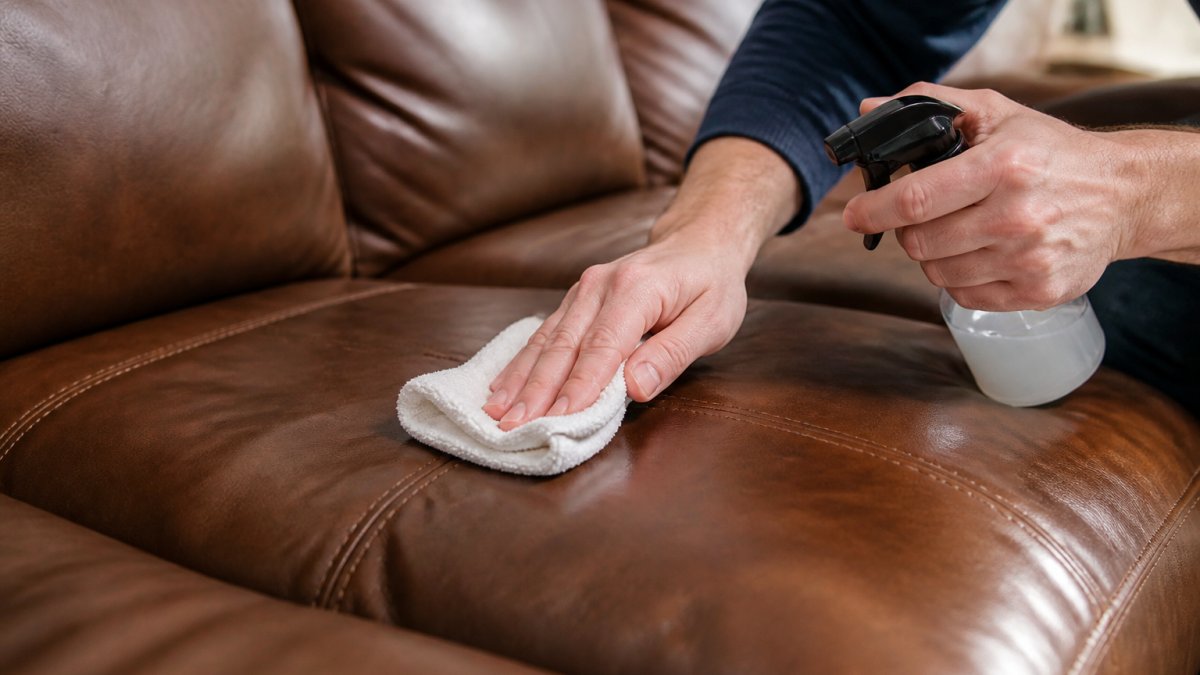
For fresh spills, blot immediately with a clean, dry cloth. Don't rub, rubbing spreads the spill and pushes it deeper into the leather. Blot repeatedly until the cloth stops absorbing liquid.
For water-based spills like coffee or juice, use a damp cloth with plain warm water. Blot the stain, then dry with a clean cloth.
Never use soap or harsh chemicals on fresh stains. These can set the stain or damage the finish. Plain water and time work for most accidents.
Vacuuming Seams, Crevices, and Upholstery
Dirt and debris hide in seams and creases where a cloth can't reach. A vacuum with an upholstery attachment cleans these areas safely.
Use the brush attachment, not the bare hose, to avoid scratching the leather. Work slowly along each seam. Crevices between cushions trap crumbs and dust, vacuum these thoroughly every month.
For stubborn debris, use a soft-bristled brush to loosen it first, then vacuum. Never use a stiff brush or scrub vigorously, as this scratches the finish.
Choosing and Testing Leather Cleaners
Commercial leather cleaners exist, but they're not always necessary. Many sofa owners get excellent results with water and a soft cloth.
If you choose a commercial cleaner, buy one designed specifically for leather upholstery, not leather shoes or leather jackets. Read the label to confirm it's safe for your leather type. Aniline leather needs gentler products than pigmented leather.
Always patch test on a hidden area first. Apply a small amount to the underside of a cushion or the back of a leg. Wait 24 hours and check for discoloration, stiffness, or other changes. Only use it on visible surfaces if the test passes.
How to Condition a Leather Couch and Prevent Drying
Conditioning is where leather maintenance shifts from cleaning to protection. Leather is skin, and like your own skin, it needs moisture to stay supple.
Why Conditioning Matters for Leather Upholstery
Leather dries out over time, especially in heated homes during winter. Dry leather cracks, peels, and loses its natural softness. Conditioning replaces lost oils and keeps the surface flexible.
Pigmented leather needs conditioning less often than aniline leather because the protective coating slows moisture loss. But both types benefit from regular conditioning.
A conditioned sofa resists stains better and develops character gracefully. Neglected leather becomes brittle and cracks easily. The difference is dramatic after a few years.
How Often to Condition Leather Furniture: A Practical Schedule
Most leather upholstery needs conditioning every 6 to 12 months, but the exact timing depends on climate, use intensity, sunlight exposure, and household composition. A one-size-fits-all schedule ignores these variables. Use this framework to build a maintenance calendar tailored to your sofa.
Weekly Maintenance (All Sofas)
- Dust with a soft, dry cloth or soft-bristled brush attachment
- Blot spills immediately
- Vacuum seams and crevices
Time required: 5-10 minutes
Monthly Maintenance (All Sofas)
- Wipe the entire surface with a barely damp cloth and dry immediately
- Inspect for new stains, scratches, or signs of wear
- Vacuum under and between cushions
Time required: 10-15 minutes
Conditioning Schedule by Environment and Use
Low-Use Sofas in Moderate Climates
If your sofa is used occasionally (guest room, formal living room) and sits in a climate with stable humidity and no direct sunlight:
- Condition once per year, ideally in fall before heating season begins
Moderate-Use Sofas in Moderate Climates
If your sofa is used daily but not heavily (family room, den) and sits away from direct sunlight:
- Condition every 9-12 months
- Watch the leather for signs it needs conditioning sooner: stiffness, dullness, or the first hint of cracking
High-Use Sofas or Homes with Pets and Children
If your sofa is used heavily (main seating area), experiences frequent spills, or has pets or children:
- Condition every 6 months
- Consider conditioning in spring and fall to address seasonal changes
- More frequent conditioning helps leather resist stains and wear from daily use
Dry Climates or Heated Homes
- Condition every 6 months, or even every 4 months in winter if indoor heating is intense
- Dry air pulls moisture from leather faster than humid climates
- Watch for stiffness and dullness as early warning signs
Sunny Rooms or High-UV Exposure
- Condition every 6 months
- UV rays accelerate moisture loss, so leather dries faster
- Consider applying a UV-protective leather conditioner or protectant product to slow fading and drying
Humid Climates
- Condition once per year (usually in fall)
- Humidity slows moisture loss, so leather needs less frequent conditioning
- Monitor for mildew or mold growth in seams; if present, address immediately with a professional
How to Apply Conditioner Correctly
Apply conditioner with a soft cloth, working in small sections. Use only a thin layer; excess conditioner makes leather feel greasy and attracts dust. Follow the product's recommended absorption time, usually 10-20 minutes, then buff away any excess with a clean cloth.
Signs Your Sofa Needs Conditioning Now
Do not wait for a schedule if the leather shows these signs:
- The surface feels stiff or less supple than usual
- The color looks dull or faded
- Fine cracks appear, especially in corners or along seams
- The leather no longer repels water beads (water absorbs instead of beading up)
Condition immediately when you notice these signs, regardless of when you last conditioned.
Seasonal Adjustment Checklist
Fall (Before Heating Season)
- Condition all sofas in homes with forced-air heating
- Heating dries indoor air and leather; conditioning before winter prevents cracking
Spring (After Heating Season)
- Inspect for winter damage: cracks, stiffness, or dull patches
- Condition if the leather shows signs of drying
- Check for mildew in humid climates
Summer (High-UV Season)
- Reposition sofas if they receive new direct sunlight
- Apply UV-protective conditioner or protectant if the sofa is in a sunny room
- Condition mid-summer if the sofa shows UV-related drying
Winter (Low-Humidity Season)
- Maintain indoor humidity between 40% and 60% if possible; use a humidifier if your home is very dry
- Condition as scheduled; do not skip conditioning in winter even though it feels counterintuitive
What Damages Leather Furniture and How to Protect It
Understanding what hurts leather helps you avoid damage before it happens.
Sunlight, Heat, and Environmental Hazards
Direct sunlight fades leather and dries it out faster than anything else. UV rays break down the natural oils in the leather, making it brittle.
Heat accelerates drying. Keep sofas away from radiators, heating vents, and fireplaces. Even indirect heat from a sunny window over time damages leather.
Humidity extremes also harm leather. Very dry air pulls moisture from the leather. Very humid air can cause mildew growth. Maintain indoor humidity between 40% and 60% if possible.
Protect your sofa by positioning it away from direct sunlight. Use curtains or blinds to filter harsh afternoon light.
Common Mistakes to Avoid
Harsh soaps and cleaners strip natural oils from leather. Avoid all-purpose cleaners, dish soap, and bathroom cleaners. These are too strong and damage the finish.
Rubbing or scrubbing aggressively scratches the surface and pushes stains deeper. Always blot, never rub. Use gentle, circular motions when you do wipe.
Letting moisture sit on leather causes water stains and mildew. Dry the sofa immediately after cleaning. Never leave a damp cloth on leather overnight.
Using heat to dry leather, hair dryers, space heaters, or direct sunlight, cracks the surface. Air dry only, in a cool, well-ventilated space.
Troubleshooting Leather Damage and When to Seek Professional Help
Minor scratches, small stains, and slight discoloration are normal on leather that gets used.
Surface scratches that don't expose the leather underneath usually fade over time as the leather develops a natural patina.
Small stains that don't respond to water and mild cleaner may need a leather-specific stain remover.
Deep gouges, large tears, peeling finish, or widespread mildew require professional repair. Attempting these yourself often makes damage worse.
If your sofa is valuable or the damage is extensive, professional help is worth the cost.
Leather sofas from Cannon's Fine Home Furnishings are built to last, but they need consistent care to reach their potential.
Frequently Asked Questions
How often should you clean a leather sofa?
Dust your leather sofa weekly with a soft, dry cloth to remove surface dirt and prevent buildup. For deeper cleaning, aim for once a month or as needed after spills. High-traffic sofas in homes with pets or children may need more frequent attention. Regular light maintenance prevents dirt from settling into the leather's pores and extends the life of your furniture.
What is the best thing to condition a leather couch with?
Use a leather conditioner specifically formulated for furniture upholstery. Always test any product on a hidden area first. Quality leather conditioners replenish natural oils without leaving a greasy residue. Avoid household oils like Vaseline or mineral oil, which can trap dirt and damage the leather finish over time. Follow the product instructions carefully for best results.
What can ruin a leather couch?
Direct sunlight causes fading and drying. Harsh soaps, household cleaners, and vinegar strip protective finishes. Excess moisture and humidity promote mold and mildew. Sharp objects, pet claws, and rough handling create scratches and tears. Heat from radiators or vents dries leather prematurely. Alcohol-based products and abrasive cloths damage the surface. Protective placement and prompt spill cleanup prevent most common damage.
Can I use household cleaners on leather upholstery?
No. Household cleaners like Murphy's oil soap, vinegar, and bleach are too harsh and can strip protective coatings from leather. They leave residue, discolor the surface, or cause cracking. Stick to products designed for leather furniture and always patch-test first. When in doubt, use only a soft cloth with warm water for light cleaning, and consult the manufacturer's care tag for specific guidance.