 ultimate-guide
How to Choose a Living Room Sectional: 2026 Guide
Table of Contents
- Start With Your Room: How to Measure for a Sectional Sofa
- Pick the Right Shape: L-Shape, U-Shape, or Curved Living Room Sectional
- Left-Arm vs Right-Arm Facing Sectional: Get the Orientation Right
- Best Sectional Fabric for Pets and Kids: Performance and Durability
- Seating Capacity, Ergonomics, and Comfort Testing
- Modular Components and Custom Configuration Options
- Long-Term Care and Integration With Your Existing Decor
- Conclusion
- Frequently Asked Questions
Last Updated: September 29, 2026
Start With Your Room: How to Measure for a Sectional Sofa
Choosing a living room sectional starts with a tape measure, not a showroom. Before you fall for a floor model, measure the space you actually have, because a sectional that overwhelms the room ruins the layout no matter how comfortable it feels.
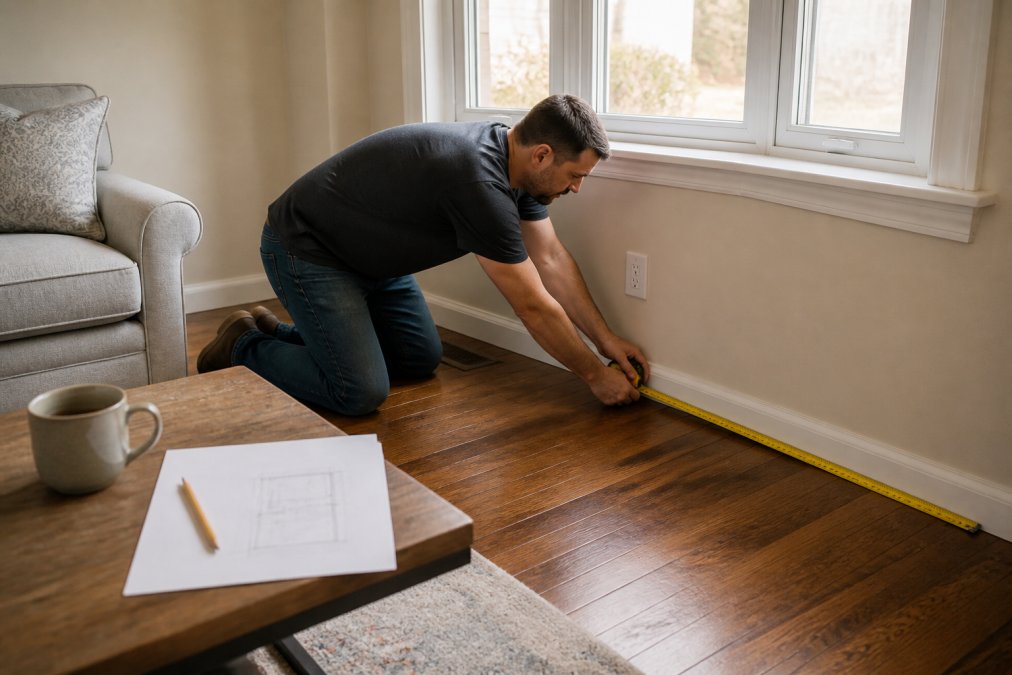
Measure the length and width of your living room, then note doorways, windows, and any fireplace or built-in that anchors the space.
Map Your Floor Plan and Traffic Flow
Sketch a simple floor plan on graph paper and mark every path people walk, from the front door to the kitchen to the hallway. Furniture placement should follow those paths, not block them. A sectional works best when it frames a conversation area without cutting off the room's natural circulation.
- Main walkways: keep 36 inches clear
- Secondary paths: 24 to 30 inches
- Coffee table gap: 14 to 18 inches
- TV viewing distance: roughly 1.5 to 2.5 times the screen size
Pick the Right Shape: L-Shape, U-Shape, or Curved Living Room Sectional
The right shape depends on your room dimensions and how you use the space. An L-shape sectional fits most living rooms because it turns a corner without closing off the area. A U-shape creates a defined conversation zone but needs a wider room. A curved sectional softens a square room and encourages face-to-face seating.
Left-Arm vs Right-Arm Facing Sectional: Get the Orientation Right
Arm orientation is the detail that trips up more buyers than any other. Stand facing the sectional as you'd sit in it: the arm on your left is the left-arm facing side, and the arm on your right is the right-arm facing side. This determines where the chaise or corner unit lands in your room.
Best Sectional Fabric for Pets and Kids: Performance and Durability
The best sectional fabric for pets and kids balances stain resistance with comfort, and performance fabric usually wins. Look for upholstery rated for high double rubs, the industry measure of how much abrasion a fabric survives. Tight weaves resist claw snags better than loose ones, and removable covers make cleanup far easier.
- Performance fabric: resists stains and moisture, wipes clean
- Microfiber or tight-weave synthetics: tough against claws and spills
- Leather or faux leather: wipes down fast, hides hair
- Textured or loose weaves: comfortable but snag-prone with pets
Frame Construction and Cushion Density: What Lasts
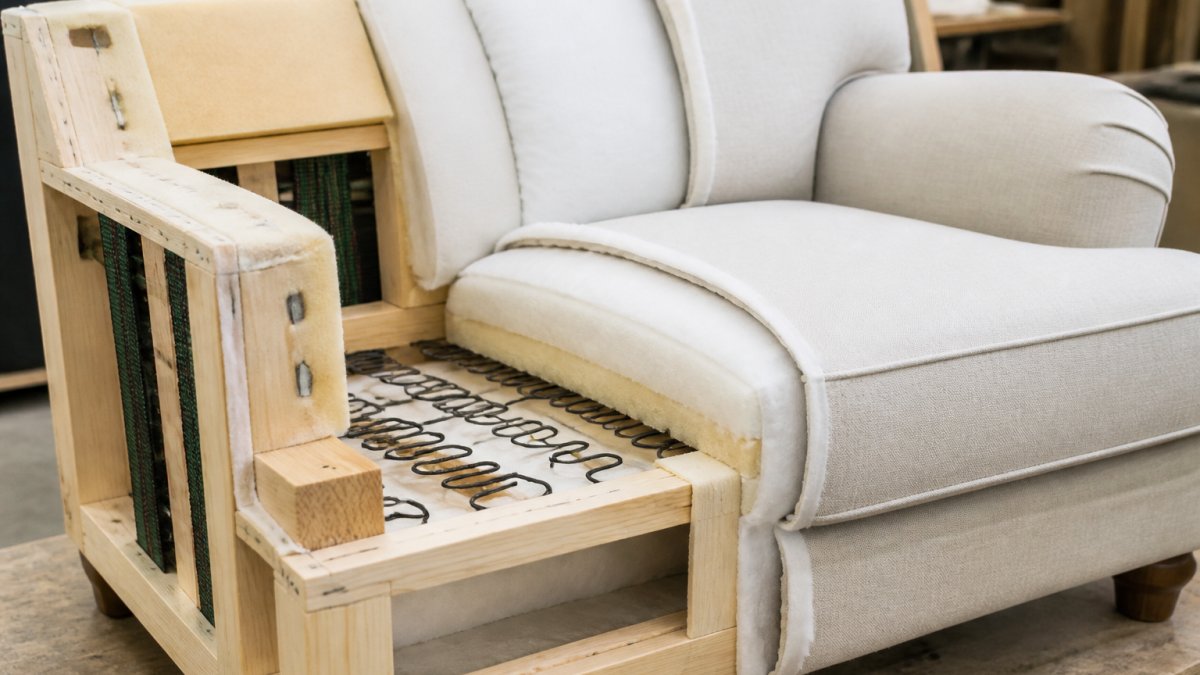
A sectional's lifespan lives in its frame and cushions. Look for kiln-dried hardwood frames joined with corner blocks or dowels, not stapled particleboard. Cushion density matters too: high-resilience foam holds its shape far longer than low-density fill, and a wrapped coil or pocket-spring core adds support that plain foam can't match.
Seating Capacity, Ergonomics, and Comfort Testing
Seating capacity should match your household, not your party ambitions. A standard two-piece sectional seats four to five; a three-piece U-shape can seat six or more. Count the people who live there, add one or two for guests, and stop there. Overbuying seats is a common regret, a six-seat sectional in a room sized for four turns the walkway into an obstacle course.
- Seat depth: 21 to 24 inches suits most adults. If you are under 5'4", 20 to 22 inches keeps your back against the cushion instead of perching forward. If you are over 6'0", look for 24 to 26 inches or a chaise you can stretch into.
- Seat height: 17 to 19 inches from floor to top of cushion lets most adults plant both feet flat. Lower than 17 inches is hard to rise from; higher than 19 inches leaves shorter sitters with dangling feet.
- Back height: 28 to 32 inches supports the shoulders; anything under 26 inches is a lounge back that offers little neck support for reading or watching TV.
- Arm height: 24 to 27 inches from the floor lets you rest an elbow and set a drink within reach.
Foam Density and Cushion Construction
Cushion feel in the showroom tells you almost nothing about how the sofa will feel in two years. Ask what is inside:
- High-resilience (HR) foam: 2.5 lb/ft³ density or higher holds shape far longer than 1.8 lb/ft³ economy foam. Below 1.8 lb/ft³, expect visible flattening within a year of daily use.
- Wrapped coil or pocket-spring core: adds support and bounce that plain foam can't match, and resists the body-shaped dip that develops in all-foam cushions.
- Down or down-blend wraps: plush and inviting, but require fluffing weekly and are a poor fit for households that want low-maintenance seating.
Modular Components and Custom Configuration Options
Modular furniture lets you build a sectional that fits your space exactly, then rearrange it later. Modular components include corner units, armless chairs, chaises, and ottomans that lock together. A custom configuration means you choose the arm style, seat depth, and number of pieces rather than accepting a fixed set.
Long-Term Care and Integration With Your Existing Decor
A sectional should look like it belongs, not like it landed from a catalog. The bulky look buyers fear almost always comes from scale mismatch, not from the sectional itself. Three moves fix it:
- Anchor it with a rug. A sectional needs a rug large enough that the front legs of every piece sit on it. As a rule of thumb, the rug should extend 6 to 12 inches beyond the sofa on the open sides. An 8x10 works for most L-shapes; a U-shape usually needs a 9x12. A rug that's too small makes the sectional look oversized by comparison.
- Leave breathing room around the coffee table. Keep 14 to 18 inches between the sofa front and the table edge so people can pass and reach without standing. A rectangular table echoes an L-shape; a round table softens a U-shape or curved sectional.
- Break up the mass with accent pieces. One accent chair angled toward the sectional, a floor lamp behind a corner, or a slim console behind a floating sofa interrupts the visual weight. Pull colors from your existing rug or artwork, and keep the sofa's tone clearly lighter or darker than the walls, a tone-on-tone match is what makes a large piece read as a wall of fabric.
Fabric-Specific Care by Material
Long-term care is not one routine, it depends on what you bought. Match the maintenance to the material:
| Material | Routine Care | Watch For |
|---|---|---|
| Performance fabric (solution-dyed) | Vacuum monthly, blot spills with mild soap and water | Avoid scrubbing, which can pill the weave |
| Microfiber / tight-weave synthetic | Vacuum with an upholstery attachment, spot-clean with a foam cleaner | Oil-based stains can set if left overnight |
| Leather / faux leather | Wipe with a damp cloth, condition leather 1-2 times a year | Sun exposure causes fading and cracking |
| Loose or textured weave | Vacuum gently on low suction, rotate cushions often | Snags from claws and jewelry; pilling in high-traffic seats |
| Care Task | Frequency | Why It Matters |
|---|---|---|
| Vacuum upholstery | Monthly | Removes grit that abrades fibers |
| Flip or rotate cushions | Every 2-3 months | Evens wear and prevents sagging |
| Spot-clean spills | Immediately | Stops stains from setting |
| Deep clean covers | 1-2 times a year | Refreshes fabric and removes buildup |
| Condition leather | 1-2 times a year | Prevents drying and cracking |
Conclusion
Getting the measurements, shape, orientation, and fabric right takes an afternoon of planning, but it saves years of regret. Cannon's Fine Home Furnishings carries trusted brands like Bassett, England, and Vaughn-Bassett across a 70,000-square-foot showroom, so you can sit on the exact sectional before you buy it. Our team offers personalized design help, flexible financing options, and professional in-home delivery and setup.
Frequently Asked Questions
What is the 2/3 rule for sofas and sectionals?
The 2/3 rule says a sofa or sectional should take up about two-thirds of the wall it sits against, or roughly two-thirds of the width of the seating area. In a 12-foot-wide room, that means a sectional around 7 to 8 feet long. This proportion keeps the living room sectional from overwhelming the space and leaves room for accent furniture, side tables, and walking paths.
How much clearance space should I leave around a sectional?
Leave at least 14 to 18 inches between the sectional and a coffee table, and 30 to 36 inches for main walking paths. For secondary paths, 24 inches works. If you plan to recline, add several inches behind the back so the mechanism has room. These gaps keep traffic flow comfortable and protect the upholstery from constant rubbing against walls or other furniture.
What is the difference between a left-arm facing and right-arm facing sectional?
Left-arm facing means the arm is on your left when you stand in front of the sectional looking at it. Right-arm facing puts the arm on your right from the same viewpoint. This matters because the chaise or corner unit must land on the correct side of your room. Measure your floor plan and note which side the chaise should sit before you order.
What is the most durable fabric for high-traffic living rooms with pets and kids?
Performance fabrics like solution-dyed acrylic, tight-weave polyester blends, and leather are the most durable choices. Look for at least 15,000 double rubs on the Wyzenbeek scale for family rooms, and 30,000 or more for heavy use. Crypton and similar stain-resistant finishes help with spills. Removable, washable covers add another layer of protection for homes with pets or young children.