 how-to
Best Way to Care for Leather Sofas: 2026 Guide
Table of Contents
- The Best Way to Care for Leather Sofas: A Simple Routine
- Gather Your Supplies Before You Start
- How to Clean a Leather Couch Without Damaging the Finish
- How to Condition a Leather Sofa the Right Way
- How to Protect Leather Furniture from Sun, Heat, and Daily Wear
- How to Prevent Leather Furniture from Cracking and Fading
- Troubleshooting Scratches, Fading, and Pet Damage
- Frequently Asked Questions
Last Updated: October 14, 2026
The Best Way to Care for Leather Sofas: A Simple Routine
The best way to care for leather sofas is a short weekly routine: dust the surface, wipe it with a damp cloth, and condition it two or three times a year.
We're Cannon's Fine Home Furnishings, a family-owned store that has helped Tri-Cities families choose leather sofas and sectionals since 1973.
Below, we'll show you exactly how to clean, condition, and protect a leather couch, plus how to fix scratches, fading, and pet damage before they get worse.
Gather Your Supplies Before You Start
Start with a short supply list. You don't need a cabinet full of products.
- Two or three microfiber cloths
- A soft brush attachment for your vacuum
- A spray bottle with distilled water
Skip anything with harsh chemicals, bleach, ammonia, or abrasive materials. Those strip the finish and dry out the hide.
How to Clean a Leather Couch Without Damaging the Finish
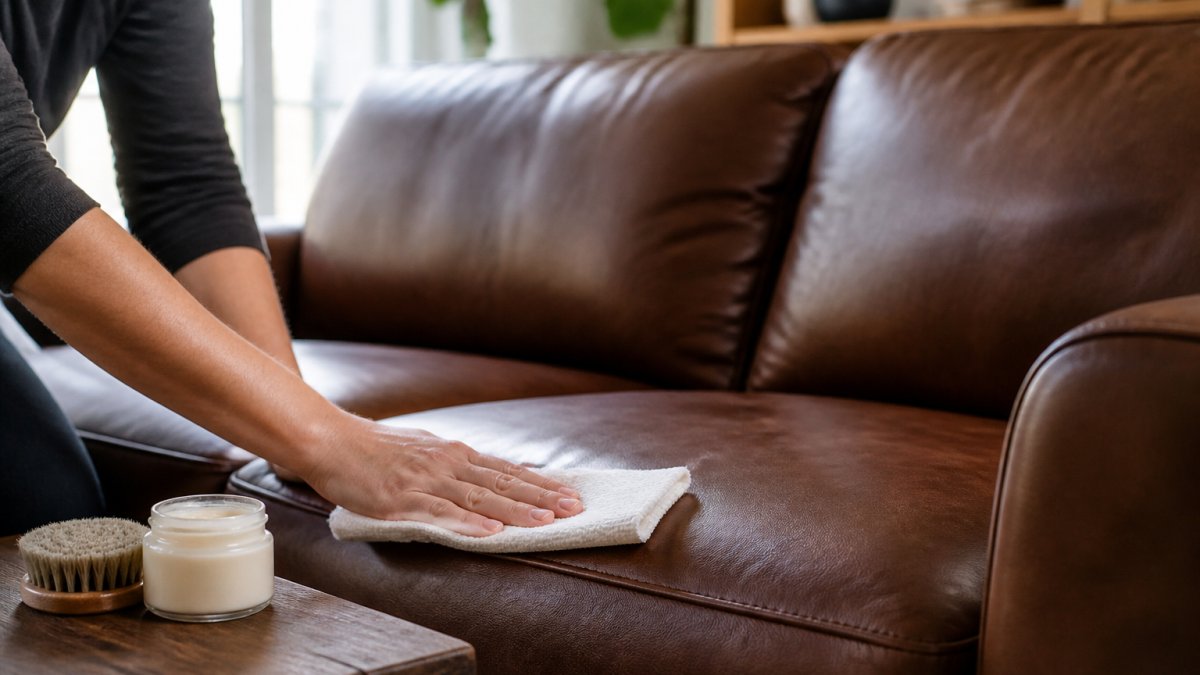
Cleaning a leather couch comes down to three rules: little water, mild soap, and a light touch. Follow them and you'll never damage the finish.
Routine Dusting and Weekly Wipe-Down
Dust is leather's quiet enemy. Left alone, it works into creases and turns into grime.
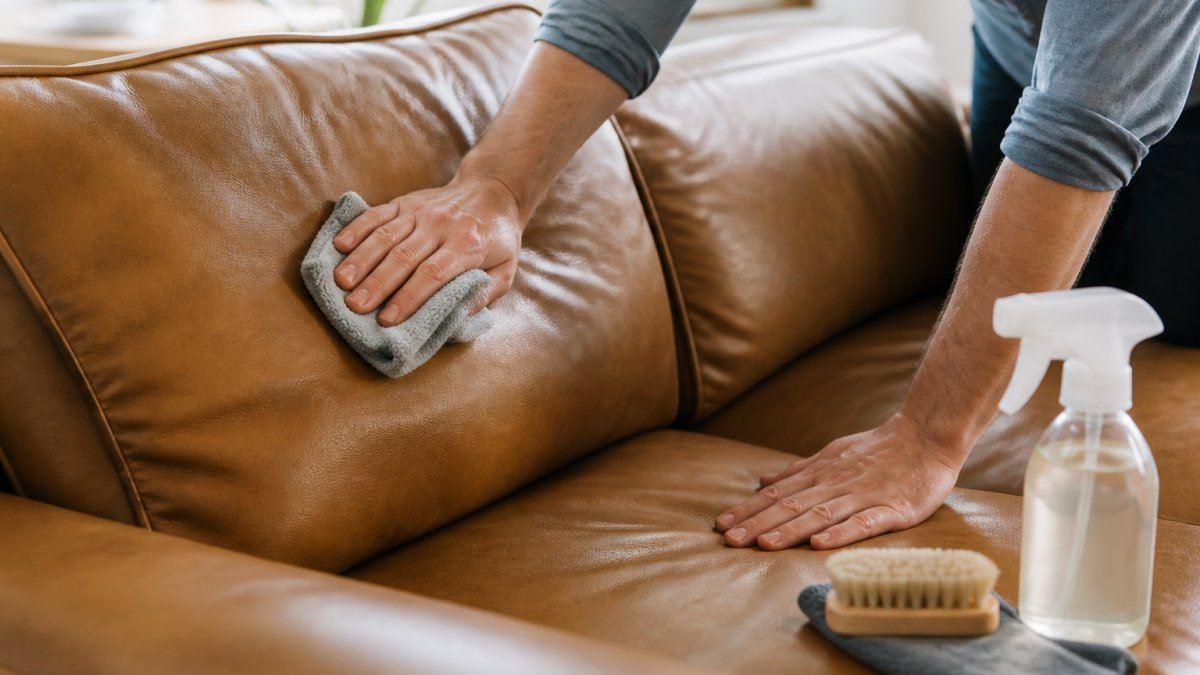
Here's the weekly routine:
- Vacuum the sofa with the soft brush attachment. Go over seams, cushions, and under the seat cushions.
- Dust off the frame and arms with a dry microfiber cloth.
- Wipe down the surface with a damp cloth and a drop of mild soap.
- Dry with a clean, soft cloth. Don't leave excess moisture sitting on the leather.
That's about ten minutes a week. It removes body oils, crumbs, and pet hair before they set in.
Removing Stains and Spills Step by Step
Blot, don't rub. Rubbing spreads the stain and pushes it into the grain.
For most spills:
- Blot the spill right away with a clean, dry cloth.
- Mix a few drops of mild soap with warm water.
- Wipe the spot with a damp cloth, using light circles.
- Dry the area with a soft cloth.
- Let it air dry away from heat sources.
For grease, blot with a dry cloth first, then follow the same steps. For ink or set-in stains, use a leather cleaner made for your finish and test it on a hidden spot first.
How to Condition a Leather Sofa the Right Way
Conditioning replaces the oils leather loses over time. Without it, leather dries out, fades, and cracks. But the right frequency and the right product depend entirely on what kind of leather you own, and that is where most advice online falls short.
Identify Your Leather Type First
Before you buy a single bottle of conditioner, check the care label sewn under the sofa or stapled to the frame. It will usually name the finish. If it does not, match what you see and feel against these four categories:
- Aniline leather, Full-grain, dyed all the way through, with no protective top coat. It feels buttery and shows natural markings, and it absorbs liquids almost immediately. It needs the gentlest products and the most frequent conditioning.
- Semi-aniline leather, Aniline-dyed with a thin protective top coat. It resists spills better than pure aniline but still takes on a patina. Moderate conditioning works well.
- Pigmented (protected) leather, The most common finish on family sofas. A pigment layer plus a clear top coat sits on the surface, so it wipes clean easily and tolerates mild soap. It needs the least conditioning of the real-leather types.
How Often to Condition, by Type
There is no universal schedule. A common pattern practitioners use:
- Aniline and semi-aniline: every 4 to 6 months, and again whenever the surface feels dry to the touch.
- Pigmented/protected: every 6 to 12 months is usually enough. Over-conditioning is a bigger risk here than under-conditioning.
- Faux leather: do not condition unless the label says to.
In dry winter air, near forced-air vents, or in rooms with strong afternoon sun, move to the shorter end of the range. In a humid climate with no direct sun, the longer end is fine.
The Conditioning Process
- Clean first. Conditioner traps dirt and grime if you skip this step, and trapped grit becomes an abrasive every time someone sits down.
- Test on a hidden spot. The back panel or the underside of a cushion is ideal. Wait 24 hours and check for color shift or a tacky feel.
- Apply a small amount of conditioner to a soft, lint-free cloth, not directly to the sofa. A dime-sized amount covers roughly a cushion face.
- Work in light circles, one section at a time, so you can see where you have been.
- Let it sit 10 to 15 minutes.
- Buff off the excess with a clean, dry cloth. If the surface still feels slick after buffing, you used too much.
Choosing a Conditioner
Look for a product labeled for your specific finish, many brands make separate formulas for aniline versus protected leather. Avoid conditioners that list petroleum distillates, silicones, or waxes high on the ingredient panel; these can clog pores on aniline leather or build up a dull film on pigmented hides. Water-based conditioners are generally the safer default for finished leathers, while oil-based products are sometimes recommended for untreated aniline.
How to Protect Leather Furniture from Sun, Heat, and Daily Wear
Sun and heat do more damage to leather than anything else. UV rays fade the color, and heat dries the hide until it cracks.
Simple protections:
- Keep the sofa out of direct sunlight. Use curtains or blinds during peak hours.
- Stay at least a few feet away from fireplaces, vents, and radiators.
- Rotate cushions monthly so wear stays even.
For daily wear, a quick wipe with a dry cloth after family movie night goes a long way. Pet hair and body oils are the two biggest causes of dull, grimy leather.
How to Prevent Leather Furniture from Cracking and Fading
Cracking and fading both trace back to dryness and UV exposure. The way to stay ahead of them is not a single heroic cleaning session, it is a predictable schedule plus knowing when a problem has crossed from maintenance into repair.
A Maintenance Schedule You Can Actually Keep
Weekly (about 10 minutes)
- Vacuum with the soft brush attachment, paying attention to seams and under the cushions.
- Wipe the surface with a dry microfiber cloth to lift body oils and dust.
- Spot-clean any spills or sticky residue the same day.
Monthly
- Rotate and flip seat cushions so wear and sun exposure stay even.
- Check the sofa's position relative to windows, vents, and fireplaces, and shift it if needed.
- Wipe down arms and headrests, the two spots that collect the most oil, with a barely damp cloth.
Seasonally (spring and fall)
- Do a full clean-and-condition pass using the process above.
- Inspect seams, creases, and high-contact areas for early dryness or fine lines.
- Re-check the care label in case the manufacturer's guidance has changed or you have forgotten a restriction.
Annually
- Review whether the sofa is getting more sun or heat than it did last year, a new lamp, a moved vent, or a rearranged room can change everything.
- Consider a professional inspection if the leather is aniline or more than ten years old.
Warning Signs: Routine Care vs. Call a Specialist
Not every mark means the same thing. Use this to decide whether you can handle it at home or need a professional.
Handle at home
- Surface feels dry or slightly stiff, condition and move away from heat.
- Fine lines in high-use areas, normal patina on aniline leather; condition on schedule.
- Color looks dull or uneven, clean, condition, and reduce sun exposure.
Call a leather specialist
- Cracks that have opened into the hide or feel rough and deep.
- Color loss across a large area, or fading that does not respond to conditioning.
- Punctures, tears, or missing material from pet claws or chewing.
A specialist can often re-dye, patch, or refinish an area for far less than the cost of replacing the sofa. The key is to call before the damage spreads, because deep cracks and large color loss are permanent once they set in.
The Two Habits That Prevent Most Damage
- Keep leather out of direct sun and away from heat. UV rays fade dye, and heat pulls moisture out of the hide. Curtains, blinds, and a few feet of distance from fireplaces, radiators, and vents do more than any product.
- Do not over-condition. Using too much product, or applying it weekly, clogs the leather's pores and leaves a sticky film that attracts dirt. Stick to the schedule for your leather type, and let the surface, not the calendar alone, tell you when it needs attention.
Troubleshooting Scratches, Fading, and Pet Damage
Most surface scratches are fixable at home.
For deeper issues:
| Problem | Quick Fix | When to Call a Pro |
|---|---|---|
| Light scratches | Rub gently with a soft cloth | Scratch cuts through the color |
| Fading | Move out of sun, condition | Color loss covers a large area |
| Pet scratches | Trim nails, use a leather repair pen | Claws puncture the hide |
| Chewing damage | Block access, use a deterrent | Leather is torn or missing |
| Ink marks | Leather cleaner, test first | Stain has set for weeks |
For pets and kids, a few habits protect the sofa:
- Keep nails trimmed and claws away from cushions
- Use a throw blanket on the seat your pet claims
- Put pens and markers out of reach
If a repair is beyond a cloth and conditioner, a leather specialist can often re-dye or patch the area for far less than replacing the sofa.
Leather sofas reward a little attention. A ten-minute weekly wipe-down, conditioning twice a year, and a smart spot against sun and heat will keep your couch looking new for a decade or more.
Frequently Asked Questions
What is the best thing to condition a leather couch with?
A dedicated leather conditioner made for your sofa's finish is the safest choice. Cream or lotion conditioners work well on most finished leathers, while wax-based products suit protected or pigmented hides. Always test on a hidden area first. Avoid using olive oil, baby oil, or saddle soap unless the manufacturer recommends them, since these can darken leather or clog pores over time.
How often should you condition a leather sofa?
For most leather sofas in a typical home, conditioning twice a year is enough. If your sofa sits in direct sunlight, near a heat source, or gets heavy daily use from kids and pets, you can condition every three to four months. Look for signs like dryness, dullness, or small cracks starting to form, and condition sooner if you notice them.
Can I use Dawn dish soap on my leather couch?
A few drops of mild dish soap in warm water can work for spot cleaning on finished leather, but it should not be your regular cleaner. Dish soap strips natural oils over time, which can lead to drying and cracking. Use it only for greasy stains, dilute it heavily, wipe with a damp cloth afterward, and follow up with a leather conditioner.
How do you clean spills off a leather couch?
Blot the spill immediately with a clean, dry microfiber cloth. Do not rub, since rubbing pushes the liquid into the grain. For water-based spills, wipe with a cloth dampened with distilled water and a drop of mild soap. For oil-based spills, sprinkle a little cornstarch on the area, let it sit for 15 minutes, then brush it away and wipe with a damp cloth.