 listicle
Benefits of Buying Local Furniture Stores: A 2026 Guide
Table of Contents
- 7 Benefits of Buying Local Furniture Stores That Online Retailers Can't Match
- Local Furniture Store vs Online Furniture Shopping: What Changes When You Walk In
- How to Compare Furniture Quality in Person Before You Buy
- How to Choose a Furniture Store: A Practical Checklist for Local Shoppers
- Questions to Ask When Buying Furniture: Custom Orders, Delivery, and After-Sales Support
- The Real Cost of Buying Local: Price, Value, and What You Actually Pay For
- When Buying Local Might Not Be Your Best Fit
- Conclusion: Making the Local Furniture Choice Work for Your Home
- Frequently Asked Questions
Last Updated: October 13, 2026
7 Benefits of Buying Local Furniture Stores That Online Retailers Can't Match
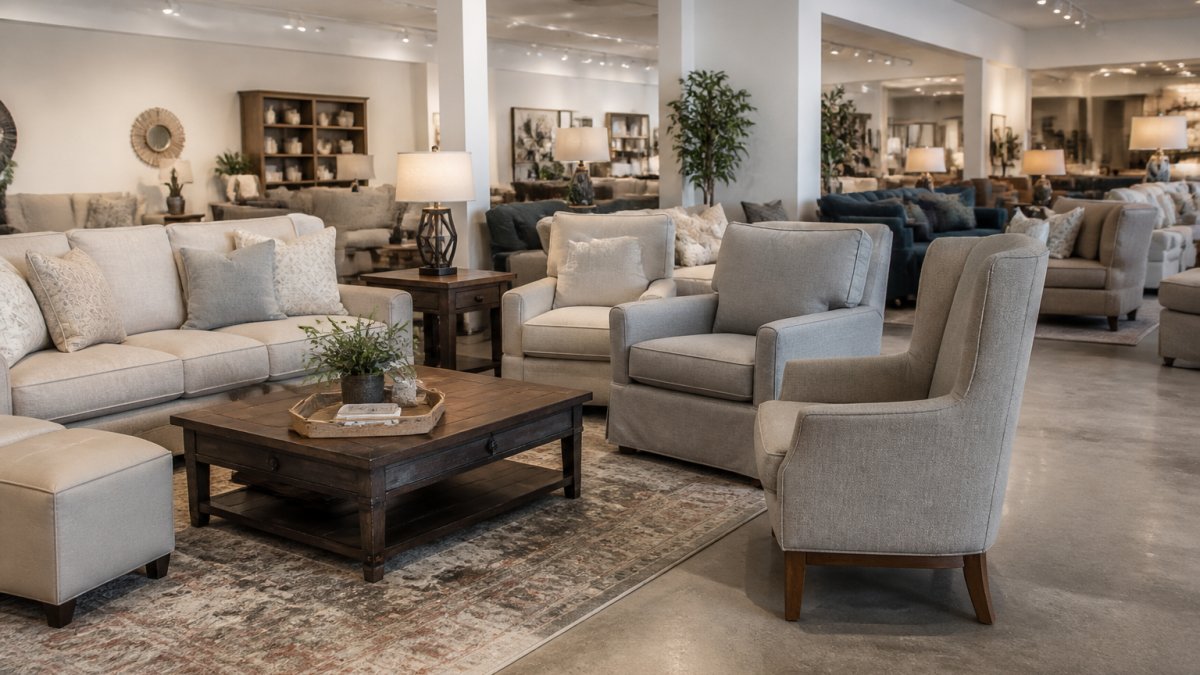
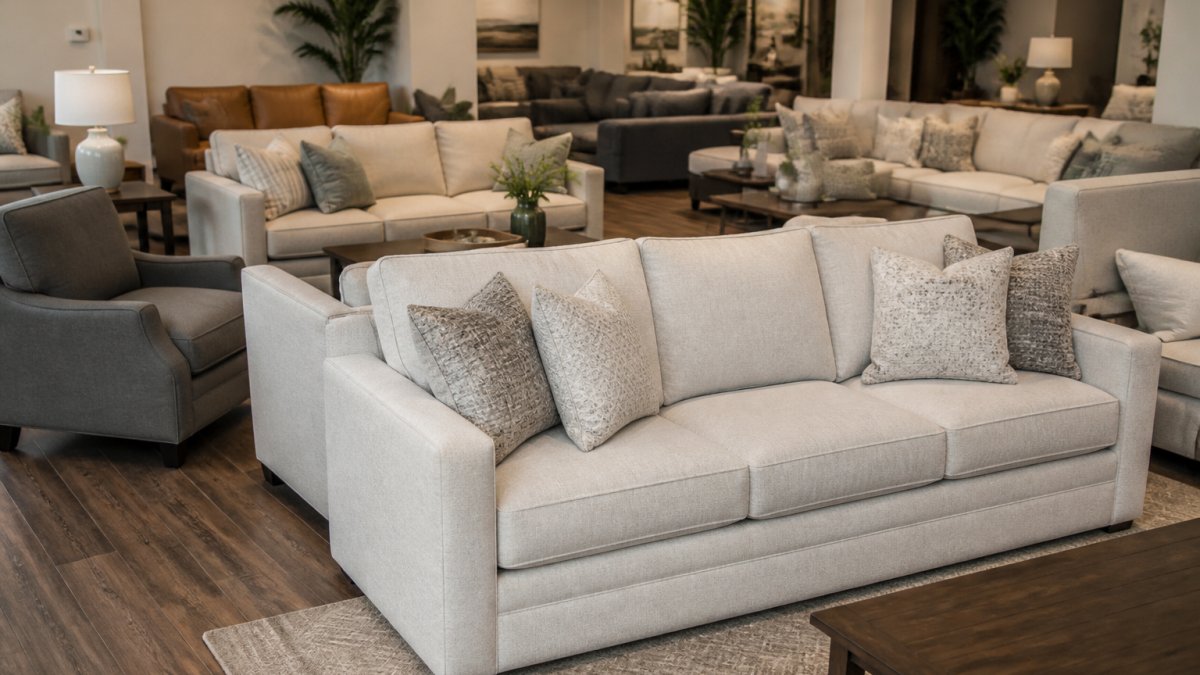
The benefits of buying local furniture stores start with something a product photo can never give you: sitting on the sofa before you pay for it. At Cannon's Fine Home Furnishings, a family-owned showroom in downtown Elizabethton serving Johnson City, Bristol, Kingsport, and the Tri-Cities since 1973, we've watched thousands of shoppers make that comparison in person.
A local furniture store is a physical retail business you can walk into, where you can inspect construction, test comfort, talk to staff face to face, and get delivery and service from people who live in your area. That matters because furniture is one of the few purchases where feel, scale, and finish decide whether you're happy.
Here are the seven benefits that hold up in practice:
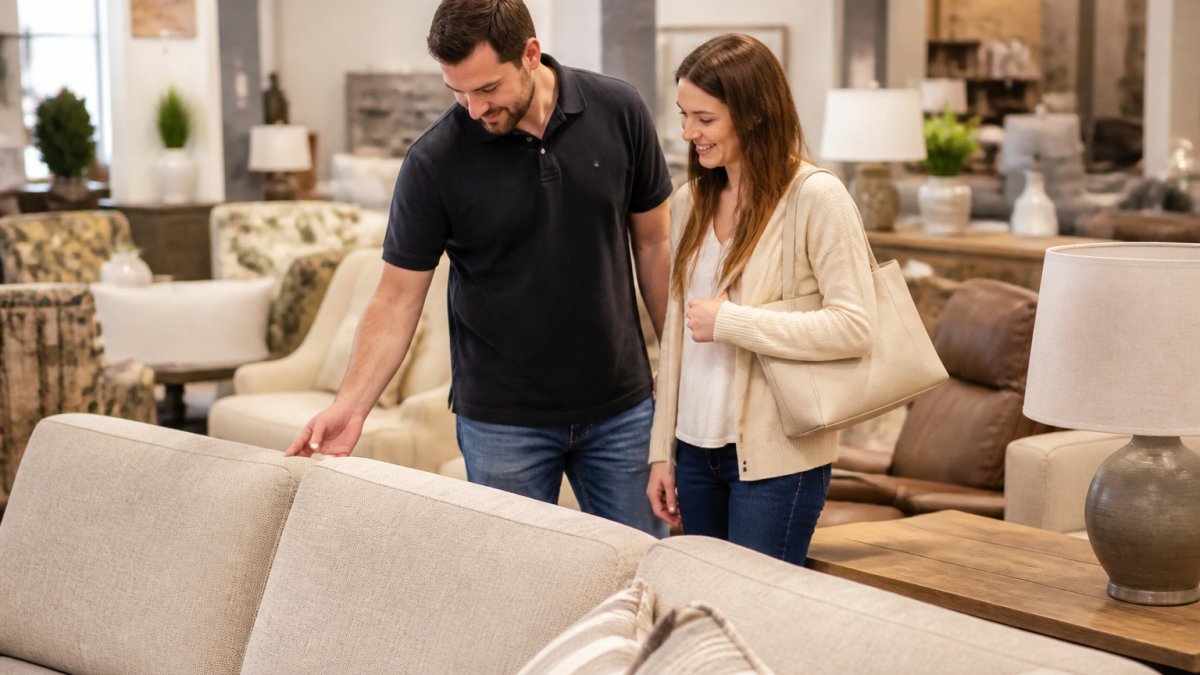
- You see and feel the actual piece. Fabric texture, cushion firmness, and frame rigidity don't photograph well.
- You get one-on-one service. A real person answers questions about dimensions, care, and materials.
- You support the local economy. Money spent locally tends to recirculate through nearby wages and suppliers, according to research on local economic multipliers from the Institute for Local Self-Reliance.
- You find unique, one-of-a-kind pieces that national chains don't stock.
- You can order custom and made-to-order furniture with help measuring your space.
- You get delivery, setup, and after-sales help from a local team.
- You keep a relationship, not just a receipt.
Local Furniture Store vs Online Furniture Shopping: What Changes When You Walk In
The core difference is verification. Online shopping gives you product photos, dimensions, and reviews. A showroom gives you the truth.
Misleading descriptions and flattering photography are common complaints in furniture e-commerce.
There's also the question of scale.
Online shopping still wins on one thing: browsing at midnight in your pajamas. If you already know the exact model, brand, and size, ordering online can be convenient.
How to Compare Furniture Quality in Person Before You Buy
Quality comparison comes down to four checks you can do in under five minutes per piece: frame, joints, cushion core, and finish.
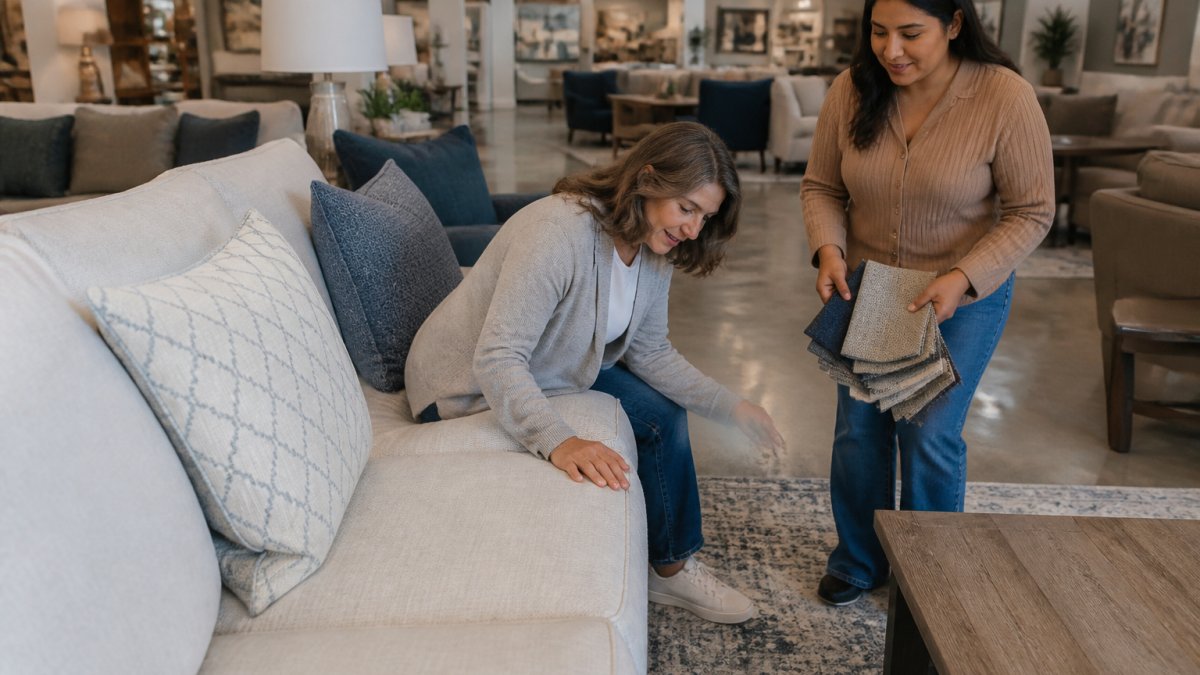
Start with the frame.
Next, check the joints. Corner blocks, dowels, and screws signal better construction than staples alone.
| What to Check | How to Test It | What Good Looks Like |
|---|---|---|
| Frame | Lift one corner gently | Solid, no twisting or creaking |
| Joints | Look under and behind | Corner blocks, dowels, screws |
| Cushion core | Press down firmly | Springs back, doesn't bottom out |
| Finish and seams | Run your hand along edges | Smooth, even, no loose threads |
Ask about materials directly. A knowledgeable staff member can tell you the frame wood, cushion foam density, and where the piece was made.
How to Choose a Furniture Store: A Practical Checklist for Local Shoppers
Choosing a store is easier with a checklist. Use this before you commit to any purchase:
- Does the showroom let you sit on, open, and inspect floor models?
- Can staff name the brands, materials, and construction methods?
- Is there a written return and exchange policy you can read before buying?
- Do they offer delivery, setup, and haul-away of old furniture?
- Are financing options explained clearly, with terms in writing?
- Can you reach a local person by phone if something goes wrong?
- Do they handle custom or made-to-order requests?
- Is the store willing to hold a piece while you measure your space?
A store that checks most of these boxes is worth your time. One that can't answer basic questions about its own inventory is a red flag, however good the prices look.
Questions to Ask When Buying Furniture: Custom Orders, Delivery, and After-Sales Support
The right questions protect you after the sale. Ask them before you sign anything.
On custom orders: What's the lead time? Can I change the fabric or finish after ordering?
On delivery: Is delivery included or an added cost?
On after-sales support: What does the warranty cover, and for how long?
For mattresses especially, ask about the trial period and comfort guarantee.
The Real Cost of Buying Local: Price, Value, and What You Actually Pay For
The sticker price is only part of the total cost. To compare fairly, build a delivered-and-set-up price for each option. Most shoppers who feel burned weren't misled on the tag, they were surprised by everything added after it.
Here's the line-item framework to run before you commit:
| Cost line | What to ask | Why it changes the math |
|---|---|---|
| Merchandise price | Is this the out-the-door price or the pre-add-on price? | Online listings often quote the lowest configuration |
| Delivery | Included, flat fee, or priced by distance and floor? | Long-distance and upstairs deliveries cost more |
| Assembly / setup | Is in-room setup included or an upgrade? | Some carriers drop at the curb or first dry area |
| Haul-away | Is removal of the old piece included? | Often a separate line item or add-on |
| Financing | What's the APR, term, and is there a deferred-interest trap? | A 0% promo that converts to a high rate can cost more than paying cash |
| Sales tax | Is tax collected on delivery and assembly too? | Taxable base varies by jurisdiction |
| Return / restocking | What's the window, the fee, and who pays return freight? | Oversized returns are the most expensive surprise |
| Warranty | Is it included, or sold as a protection plan? | Plan cost and coverage vary widely |
Run the same eight lines for the local store and the online or chain option. The online headline price advantage frequently shrinks once delivery, assembly, haul-away, and return risk are priced in, and sometimes it disappears entirely.
A few practical rules of thumb:
- Compare the delivered-and-set-up price, not the tag. A sofa that's $200 cheaper online but ships with a $150 delivery fee and no setup is not $200 cheaper.
- Price the return before you need it. Ask what a return costs if the piece doesn't fit, doesn't match, or arrives damaged. Restocking fees and return freight on oversized items are the most common source of sticker shock.
- Treat financing as a cost, not a feature. A deferred-interest promotion not paid off in full during the promo window can retroactively apply interest to the original balance (I got a credit card promising no interest for a purchase if I pay in full within 12...). Ask for the APR and payoff terms in writing.
- Value is cost per year, not cost today. A sofa that lasts fifteen years costs less per year than a cheaper one that sags in three, which is why the in-person checks earlier in this article matter.
What you're typically paying for at a local store includes inspecting the piece before buying, delivery and in-room setup by a local crew, a real person to call for service questions, and financing explained face to face. Those aren't free, they're built into the price. The question is whether the total delivered cost is competitive once every line is on the table.
When Buying Local Might Not Be Your Best Fit
Local isn't automatically right for everyone. Here's when an online or national-chain purchase is genuinely the better call, and when it isn't.
Lean online or national chain when:
- You need one specific model or SKU. If you've decided on an exact brand, model, and configuration, a local store may not stock it, and ordering locally can add lead time without adding value.
- You're furnishing a short-term space. A rental, staging property, or first apartment you'll leave within a year or two rarely justifies the premium of a long-life piece.
- You need it tomorrow. Local lead times on made-to-order and custom pieces are often measured in weeks. If your timeline is days, in-stock online or big-box inventory may be the only realistic option.
- You live far from any showroom. If the nearest store is a multi-hour drive, the trip cost, fuel, time, and a second trip for delivery issues, can outweigh the in-person advantage.
- You're optimizing purely on lowest upfront cash outlay. If budget is the binding constraint and you accept the durability trade-off, a lower-cost online option can be the rational choice.
Lean local when:
- The piece is something you'll sit, sleep, or eat on daily. These are the purchases where comfort, fit, and construction failures are most expensive to live with.
- Your space is unusual. Odd dimensions, tight stairwells, and narrow doorways are where in-person measuring and a local delivery crew earn their keep.
- You want service after the sale. Repairs, warranty claims, and replacement parts are easier to resolve with a store you can walk into.
- You value seeing the actual finish and fabric. Color and texture are what product photography gets wrong most often.
A useful way to decide: score each option on four axes, selection, availability, total delivered price, and after-sale support.
The point isn't that local always wins. It's that local wins more often than people assume, especially for pieces you'll use every day, and knowing when it doesn't lets you choose deliberately instead of by default.
Conclusion: Making the Local Furniture Choice Work for Your Home
Furnishing a home is a series of decisions, and the store you buy from shapes how well they hold up. Cannon's Fine Home Furnishings has served the Tri-Cities since 1973 with a 70,000-square-foot showroom where you can see, sit on, and compare furniture in person, from sofas and recliners to bedroom sets, dining tables, and mattresses. We offer personalized design help and shopping assistance, dedicated disability services and personal shopper support, flexible financing, and professional in-home delivery and setup, and when you call, you reach a real person at a family-owned business.
Frequently Asked Questions
What are the benefits of buying furniture from a local store?
You can see, sit on, and test furniture before buying, which lowers the risk of a costly mistake. Local stores offer personalized service, knowledgeable staff who know the brands they carry, and a showroom where you can compare materials, comfort, and construction side by side. You also get delivery and setup from people you can call directly, plus the satisfaction of keeping money in your community.
Is it better to buy furniture online or in a store?
It depends on what matters most to you. Online shopping offers convenience and a wide selection, but you cannot test comfort, check craftsmanship, or see true colors and scale in person. A local furniture store lets you compare quality hands-on, ask questions about materials and warranties, and get help with delivery logistics. For big purchases like sofas, mattresses, and dining sets, in-person evaluation usually pays off.
How can I tell if a furniture store offers good quality?
Look for solid wood frames, joinery that uses dowels or screws rather than staples, and cushions that hold their shape when you press them. Ask about the manufacturer, warranty terms, and whether the store has a repair or service policy. A good local store will welcome these questions and let you inspect construction details like corner blocks and fabric rub counts without pressure.
What should I ask before buying furniture from a local store?
Ask about delivery timelines, setup fees, and whether old furniture removal is included. Confirm the return policy, warranty coverage, and who handles repairs if something goes wrong. For custom orders, get the lead time, cancellation terms, and fabric or finish return rules in writing. Also ask if the store offers financing and whether the salesperson will be your point of contact after the sale.