 listicle
Signs You Need a New Mattress: 8 Warning Signs to Know
Table of Contents
- 1. Visible Sagging, Dips, and Body Impressions
- 2. Waking Up With Aches, Pains, or Morning Stiffness
- 3. Is Your Mattress Causing Back Pain? How to Tell
- 4. Tired, Unrefreshed, and Tossing All Night
- 5. How Long Does a Mattress Last? Lifespan by Material
- 6. When to Replace a Mattress: Age, Noise, and Uneven Support
- 7. Your Mattress Replacement Checklist Before You Buy
- Conclusion: Signs You Need a New Mattress and Your Next Step
- Frequently Asked Questions
Last Updated: October 21, 2026
1. Visible Sagging, Dips, and Body Impressions
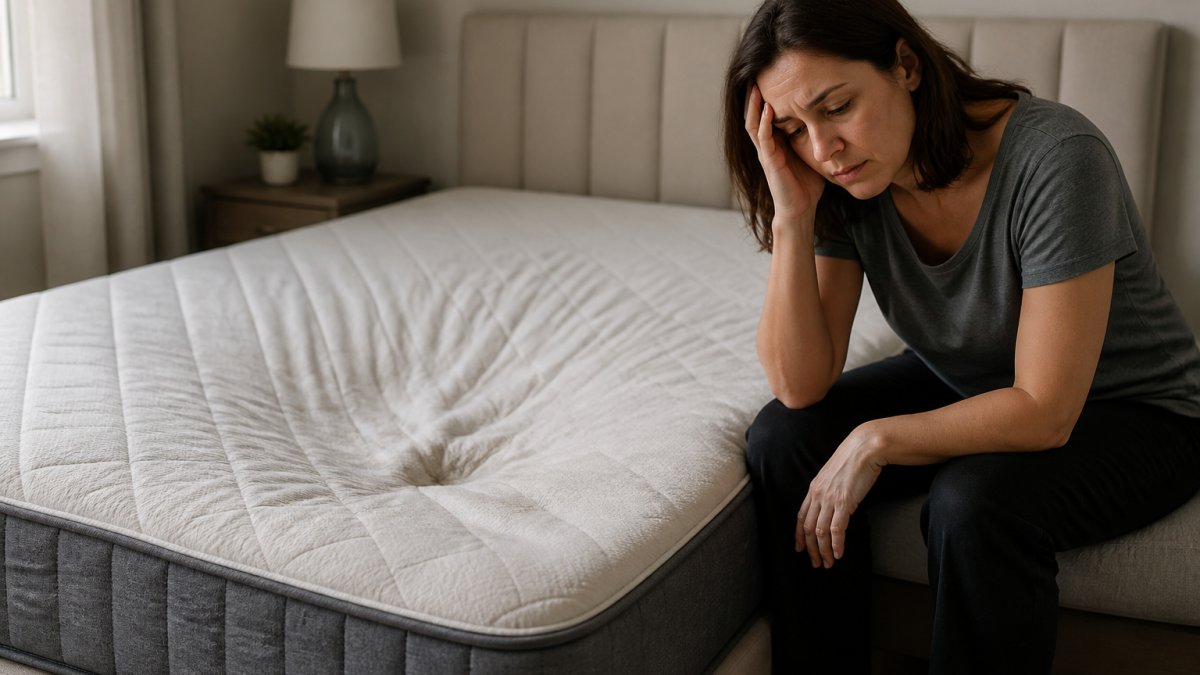
Visible sagging is the clearest physical sign you need a new mattress. When the surface dips under your hand or shows a permanent valley where you sleep, the support layers have broken down and no amount of flipping will bring them back.
Pull the sheets back and press your palm into the center of the bed. A healthy mattress springs back evenly. A worn one leaves a hollow that takes several seconds to recover, or never fully recovers at all.
Body impressions are different from true sagging, and the distinction matters. A shallow impression where your body rests is normal settling. A dip deep enough to roll you toward the middle, or to make two sleepers drift together, is structural failure.

2. Waking Up With Aches, Pains, or Morning Stiffness
Morning stiffness that fades within an hour is often a mattress problem. Waking with aches and pains in your hips, shoulders, or lower back, especially when the discomfort eases as the day goes on, points to a surface that no longer cushions pressure points.
A mattress that has lost its comfort layer stops distributing weight evenly. Your body ends up fighting the surface all night, and you feel it the moment you get up.
Where you hurt tells you something. Hip and shoulder pain usually means the top layer has compressed. Lower back pain often signals lost support in the core. If you sleep better in a hotel bed or on a guest room mattress than your own, that's a strong clue the problem is your bed, not your body.
3. Is Your Mattress Causing Back Pain? How to Tell
A mattress causing back pain typically produces soreness that shows up after sleep and improves once you're up and moving. Pain that gets worse through the day, or that follows activity rather than rest, usually has another cause.
Here's how to separate the two before you spend money on a new mattress:
- Timing: Mattress-related pain is worst in the morning and eases within an hour of getting up.
- Location: It concentrates in pressure points (hips, shoulders) or the lower back, matching where you sleep.
- Pattern: It started or worsened after the mattress aged, or after you changed sleep position.
- Test: A few nights on a different bed, or on the floor, brings noticeable relief.
4. Tired, Unrefreshed, and Tossing All Night
Feeling tired after a full night's sleep is one of the most overlooked signs you need a new mattress. You can spend eight hours in bed and still wake unrefreshed when the surface keeps triggering micro-awakenings you never remember.
Restless nights, constant tossing and turning, and partner disturbance all trace back to the same problem: a mattress that no longer supports your sleep position. When your body can't settle, it keeps shifting to find comfort.
Sleep position matters here. Side sleepers need pressure relief at the hip and shoulder. Back and stomach sleepers need firmer support to keep the spine aligned. A worn mattress fails both, and the result is shallow, broken sleep that leaves you drained by mid-morning.
5. How Long Does a Mattress Last? Lifespan by Material
Most mattresses last seven to ten years, but lifespan depends heavily on materials and use (How Long Should A Mattress Last?). Knowing what you own helps you judge whether age alone justifies a replacement.
| Material | Typical Lifespan | Watch For |
|---|---|---|
| Innerspring | 6-8 years | Sagging, squeaky coils |
| Memory foam | 7-10 years | Deep body impressions, softening |
| Latex | 10-15 years | Surface wear, loss of bounce |
| Hybrid | 7-10 years | Compressed comfort layers |
Heavier sleepers and couples tend to wear a mattress faster. So does poor ventilation and a missing mattress protector. Age is a guide, not a rule. A well-built mattress cared for properly can outlast its category, while a cheap one can fail early.
6. When to Replace a Mattress: Age, Noise, and Uneven Support
Replace a mattress when age, physical breakdown, and comfort problems line up. Any one signal is worth watching. Two or three together mean it's time to shop.
Unusual noises are an easy one to miss. A squeaky bed or creaking springs point to worn internal components, even if the surface still looks fine. Lumps, bulges, and an uneven surface mean the support layers have shifted or failed.
Hygiene is the quiet factor. Over the years, mattresses collect dust mites and allergens, which can aggravate allergies, asthma, and skin irritation. If you wake congested or itchy, and the mattress is past its prime, that's a real reason to replace it.
7. Your Mattress Replacement Checklist Before You Buy
Before you commit to a new mattress, work through this checklist. It separates a genuine replacement from a fixable problem and keeps you from buying on impulse.
- Confirm age: is the mattress past seven years, or its material's expected lifespan?
- Check for sagging, dips, lumps, and an uneven surface
- Rule out the foundation: is the box spring or frame sound?
- Track morning pain and stiffness for two weeks
- Try rotation and a topper as a troubleshooting step
- Note sleep position and firmness needs
- Set a budget and confirm delivery and setup details
- Plan disposal of the old mattress
Troubleshooting before replacing saves money. If rotation, a topper, and a foundation check solve the problem, you've bought yourself time. If none of it helps, the checklist gives you clear grounds to move on.
Conclusion: Signs You Need a New Mattress and Your Next Step
If sagging, morning aches, and unrefreshed sleep have stacked up, the answer isn't another topper. It's a mattress that actually supports how you sleep. At Cannon's Fine Home Furnishings, we carry trusted names like Tempur-Pedic, Stearns & Foster, Sealy, Helix, and DreamCloud in a 70,000-square-foot showroom where you can test each one in person. Our team offers personalized guidance, flexible financing, and professional in-home delivery and setup, so you can stop guessing and start sleeping better. Visit us to find the right fit for your home and budget.
Frequently Asked Questions
What are the signs that a mattress needs to be replaced?
The clearest signs include visible sagging or body impressions, waking with aches or stiffness, feeling unrefreshed after a full night's sleep, restless tossing and turning, and lumps or uneven support. Unusual squeaks, a persistent odor, or allergy symptoms that flare up in bed also point to a worn mattress. If you notice two or more of these at once, it's usually time to start shopping for a new mattress.
Can an old mattress cause back pain?
Yes. A mattress that has lost support can let your spine fall out of alignment, which often shows up as lower back pain or morning stiffness. The key is distinguishing mattress-related pain from other causes: if your back feels better after sleeping somewhere else, like a hotel, the mattress is likely the culprit. A supportive new mattress with proper pressure relief can make a real difference for many sleepers.
How often should you replace your mattress?
Most mattresses last 7 to 10 years, but that varies by material and use. Innerspring and foam models often need replacing sooner, while latex and hybrid mattresses can last longer. Heavy use, a poor foundation, and skipping regular rotation shorten lifespan. If your mattress is past 8 years old and you're noticing sagging or discomfort, it's worth evaluating a replacement even if it looks fine on the surface.
Can you fix a sagging mattress, or should you replace it?
Minor sagging can sometimes be eased with a firm mattress topper or a new foundation, especially if the sag comes from a worn box spring rather than the mattress itself. Deep dips, lumps, or sagging that returns within weeks usually mean the support layers have broken down, and no topper will fix that. If the mattress is more than 7 years old and sagging is paired with pain or poor sleep, replacement is the better investment.